Peptide Medicine
Glutathione Injections: Uses, Evidence, and Safety
Medically reviewed by HealthRX.com Medical Team · Last reviewed
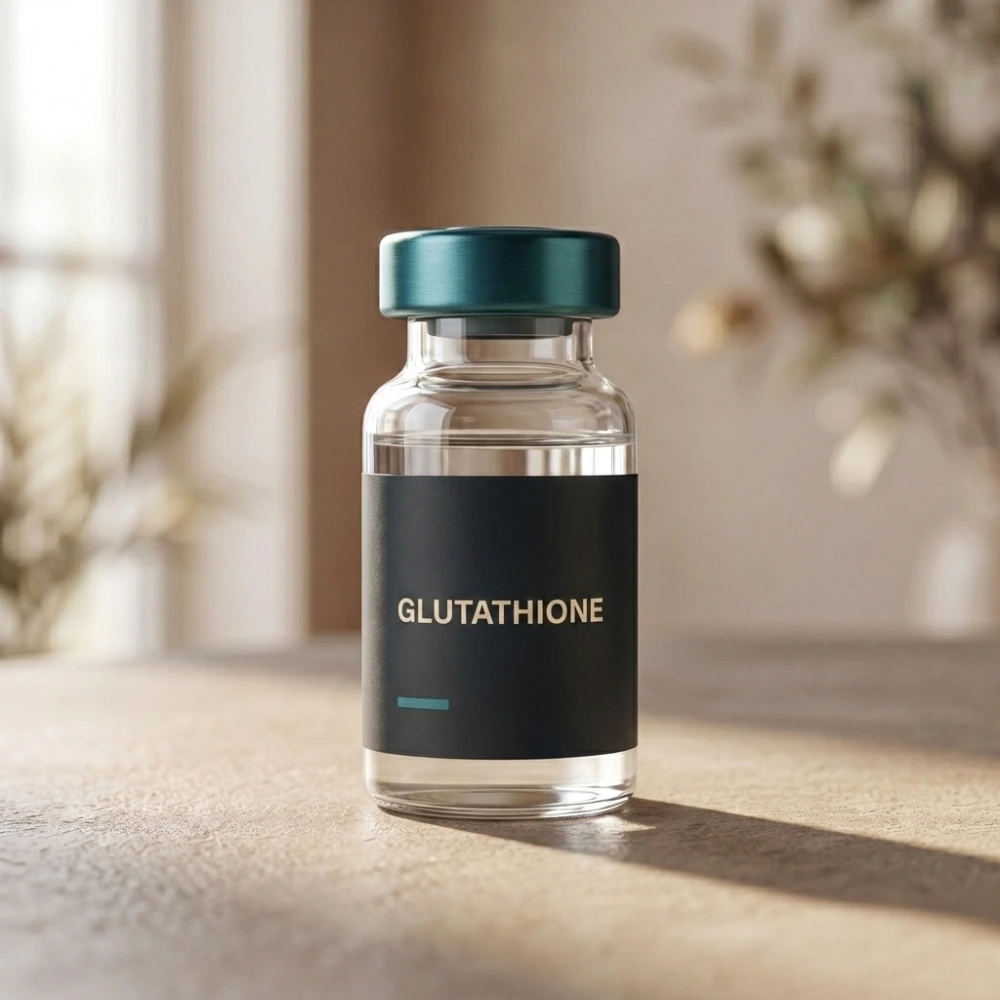
What is glutathione?
Glutathione is a tripeptide made of glutamate, cysteine and glycine. The body produces it in every cell, where it is the main antioxidant. It also recycles other antioxidants such as vitamins C and E and supports detoxification in the liver.
How does glutathione work?
Glutathione neutralizes free radicals and supports detoxification. Its use as a skin-lightening agent is based on the way it can shift melanin production toward the lighter pigment and reduce the activity of the enzyme tyrosinase, which the skin uses to make pigment.
This pigment effect is the reason glutathione is marketed for brightening, but how strongly it works depends heavily on the form, dose and route used. [1]
What does the research show?
Small studies of oral and topical glutathione report modest, reversible skin lightening. Evidence for injectable and IV glutathione as a skin-whitening treatment is weak, and its popularity has outpaced controlled research. Glutathione has also been studied separately in conditions such as Parkinson disease and chemotherapy-related nerve damage.
- Oral glutathione has shown modest, reversible skin-lightening effects in small trials. [1][2]
- Topical glutathione has some supporting evidence for skin tone. [1]
- Injectable and IV glutathione for skin whitening lacks strong controlled evidence. [1]
- Honest framing: the brightening effect, where present, is modest and reverses when treatment stops.
How is glutathione used and dosed?
Oral glutathione is taken daily, commonly in the range of 250 to 1000 mg in studies. Injectable and IV glutathione are given by a provider, with marketed doses varying widely and no standardized regimen. Any injectable use should be supervised by a licensed clinician.
| Form | Typical use | Notes |
|---|---|---|
| Oral | Daily capsule | Best evidence for skin effects; modest and reversible |
| Topical | Applied to skin | Some supporting evidence for tone |
| IV or IM | Provider-administered | Weak evidence for whitening; safety concerns with high doses |
Is glutathione safe, and what are the side effects?
Oral glutathione is generally well tolerated. Injectable and IV use is the main safety concern. Regulators including the Philippine FDA have warned that high-dose IV glutathione used for skin whitening has been linked to serious reactions, including severe skin conditions, kidney and thyroid effects, and infections from unsafe injection.
- Oral: generally well tolerated in studies.
- Injectable or IV: regulators have reported serious adverse events with high-dose skin-whitening use; never use unregulated products. [1]
- Use only under medical supervision with a reputable pharmacy.
Is glutathione legal and FDA approved?
Glutathione is not FDA approved as a skin-lightening treatment. Injectable forms are available only through compounding pharmacies on a prescription, while oral glutathione is sold as a dietary supplement. The FDA has cautioned against injectable skin-whitening products.
How to get Glutathione online
Glutathione is available through HealthRX after an online visit with a licensed provider, who reviews your history and, when appropriate, issues a prescription that a licensed US pharmacy dispenses and ships to you. Glutathione starts at $84 per 10mL vial.
Because Glutathione is a antioxidant tripeptide and prescription-only, it cannot be bought over the counter. What you pay depends on the dose and quantity your provider recommends. You can begin the online visit in a few minutes and are only prescribed if a provider determines it is appropriate.
Is Glutathione right for you?
Injectable glutathione is used as an antioxidant, often by people focused on skin brightness or general wellness. Regulators have cautioned against intravenous glutathione marketed for skin whitening, so your provider will set honest expectations about what the evidence supports before prescribing. It is prescription-only.
What to expect from an online Glutathione visit
Your short online intake goes to a licensed provider, who reviews your history and decides whether glutathione is appropriate. If it is, a licensed US pharmacy prepares and ships it with instructions. You are only charged for the medication if you are prescribed.
Glutathione is priced per vial rather than through insurance, with a lower per-vial price at larger quantities.
Frequently asked questions
Does glutathione lighten skin?
Oral and topical glutathione can produce modest, reversible lightening in small studies. Evidence for injectable skin whitening is weak, and any effect reverses when treatment stops.
Are glutathione injections safe?
Oral glutathione is generally well tolerated, but high-dose IV glutathione used for skin whitening has been linked by regulators to serious reactions. Injectable use should be medically supervised.
Oral or IV glutathione, which is better?
Oral and topical forms have the clearest evidence for skin. IV use for whitening lacks strong evidence and carries more risk.
Is glutathione FDA approved?
No. It is not FDA approved for skin lightening. Injectable forms are compounded on prescription, and oral glutathione is sold as a supplement.
Citations
- Sonthalia S, et al. Glutathione as a skin whitening agent: Facts, myths, evidence and controversies. Indian J Dermatol Venereol Leprol. 2016;82(3):262-272.
- Weschawalit S, et al. Glutathione and its antiaging and antimelanogenic effects. Clin Cosmet Investig Dermatol. 2017;10:147-153.
This guide is educational and is not a substitute for individualized medical advice. Glutathione is prescription-only and requires evaluation by a licensed provider.